
The Infrastructure Cost of Hardware-Based Fleet Systems
Fleet tracking has become synonymous with installed hardware. Across logistics, transportation, utilities, construction, and field services, the dominant model looks the same: Install telematics devices → transmit GPS data → visualize in the cloud → optimize operations. On paper, this seems straightforward. In practice, it creates an infrastructure burden that compounds over time — financially, operationally, and strategically.
Juxta
Juxta Team
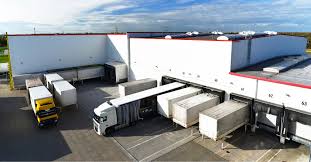
The Hidden Layers of Fleet Infrastructure
Hardware-based fleet systems require more than tracking devices.
They require an ecosystem.
1. Device Procurement and Lifecycle Management
Every vehicle, trailer, or asset requires a physical device. That means:
- Sourcing and purchasing hardware at scale across the entire fleet
- Managing shipping, warehousing, and inventory buffers
- Handling hardware revisions and obsolescence cycles
- Replacing damaged, stolen, or outdated units
- Planning for device refresh every few years
As fleets grow, hardware becomes a rolling capital expenditure program.
Tracking 50 vehicles is a purchase.
Tracking 5,000 vehicles is a supply chain.
2. Installation and Field Deployment
Hardware does not deploy itself.
Even plug-and-play systems require:
- Technician scheduling
- Vehicle downtime
- Wiring integration with power systems
- Calibration and verification
- Quality control across multiple geographies
Large fleets often stagger installation over months. During that period, visibility is partial and inconsistent.
Infrastructure-heavy systems scale geographically — not instantly.
3. Cellular and Satellite Dependency
Traditional fleet tracking depends on:
- GPS signal availability
- Cellular data transmission
- Continuous cloud connectivity
This creates structural constraints:
- Indoor yards, warehouses, and depots degrade GPS
- Urban canyons create multipath distortion
- Underground or covered facilities eliminate signal entirely
- Cellular dead zones interrupt visibility
- Satellite-based positioning is inherently RF-emitting and detectable
When fleet intelligence depends on radio signals, it inherits the vulnerabilities of radio systems.
In RF-constrained environments, hardware systems don’t degrade gracefully — they go blind.
4. Maintenance and Operational Overhead
Every device introduces operational entropy:
- Firmware updates
- Connectivity troubleshooting
- SIM management
- Battery replacements for non-powered assets
- Warranty processing
- Remote diagnostics
Multiply that across thousands of vehicles and assets.
What begins as “tracking hardware” becomes a distributed device management operation.
5. Security Exposure
Radio-dependent systems emit signals.
That means they can be:
- Detected
- Spoofed
- Jammed
- Intercepted
For commercial fleets, this is a nuisance.
For defense, government, or high-security logistics, it is a liability.
As geopolitical instability increases, RF-dependent fleet tracking becomes strategically fragile.
The Economic Curve of Hardware Scaling
Hardware-based systems scale linearly with asset count.
More vehicles = more devices = more installation = more connectivity = more maintenance.
That creates:
- Capital-heavy expansion cycles
- Slower rollout in new facilities
- High upfront costs before operational value is realized
- Ongoing operating expense tied to physical infrastructure
This is infrastructure-first architecture.
It assumes the world must be instrumented before it can be visible.
The Coverage Problem No One Talks About
Most fleet systems excel outdoors on open roads.
But fleet operations rarely exist in only one environment.
Vehicles move through:
- Indoor warehouses
- Covered loading docks
- Multi-level depots
- Underground facilities
- Dense industrial sites
- Remote or rural zones with limited connectivity
GPS was built for clear skies.
Fleet operations were not.
The result is a structural blind spot in exactly the environments where coordination and safety matter most.
The Alternative: Infrastructure-Free Positioning
A new architectural model is emerging — one that removes hardware dependency from fleet intelligence.
Instead of instrumenting every asset with additional RF hardware, this approach:
- Uses existing inertial sensors already embedded in modern devices
- Converts floorplans and satellite imagery into polygonized spatial models
- Generates synthetic IMU data to train transformer-based accuracy engines
- Executes positioning on-device for offline resilience
- Minimizes drift over long operational durations
- Eliminates dependence on GPS, WiFi, BLE, or UWB anchors
This is infrastructure-free fleet positioning.
No anchors.
No beacons.
No facility rewiring.
No installation crews.
Just model deployment.
Why Infrastructure-Free Changes the Economics
When positioning becomes software-defined:
Scaling a fleet does not require scaling hardware.
Deployment becomes:
Upload environment → train model → deploy to devices → operational.
Rollout cycles compress from months to hours.
Expansion into new facilities does not require site surveys or infrastructure installation.
Capital expense shifts toward computational training rather than distributed hardware.
Operational overhead drops because there are no RF devices to maintain.
And coverage becomes universal:
Indoor
Outdoor
Underground
Remote
Without switching systems.
Security and Resilience by Design
On-device inference changes the threat model.
When positioning:
- Does not emit radio signals
- Does not depend on continuous connectivity
- Can operate air-gapped
- Is encrypted end-to-end
It becomes inherently more resilient.
In high-security logistics, defense operations, and critical infrastructure environments, this distinction is not theoretical.
It is existential.
The Architectural Shift Ahead
Fleet management is evolving from:
Hardware-defined visibility
to
Software-defined universal positioning
The first generation of telematics optimized the GPS era.
The next generation removes its constraints.
As fleets become more autonomous, more distributed, and more security-sensitive, infrastructure-heavy tracking systems will increasingly struggle under their own weight.
The future of fleet intelligence is not more hardware.
It is fewer dependencies.
Conclusion
Hardware-based fleet systems helped digitize vehicle operations.
But they carry infrastructure costs that compound:
Procurement. Installation. Connectivity. Maintenance. Security exposure. Coverage gaps.
The question for fleet operators is no longer whether tracking matters.
It is whether their tracking architecture can scale universally — without scaling infrastructure.
The fleets that transition first will operate with:
Faster deployment
Lower capital burden
Universal coverage
Offline resilience
And infrastructure independence
That is not incremental improvement.
It is architectural replacement.